Tesla's Pivot: Cybertruck Reservations Voided in Australia After Seven-Year Wait
After nearly seven years of holding deposits, Tesla has officially ended Cybertruck production plans for right-hand-drive markets in Australia and New Zealand.
By Adam Lin ·
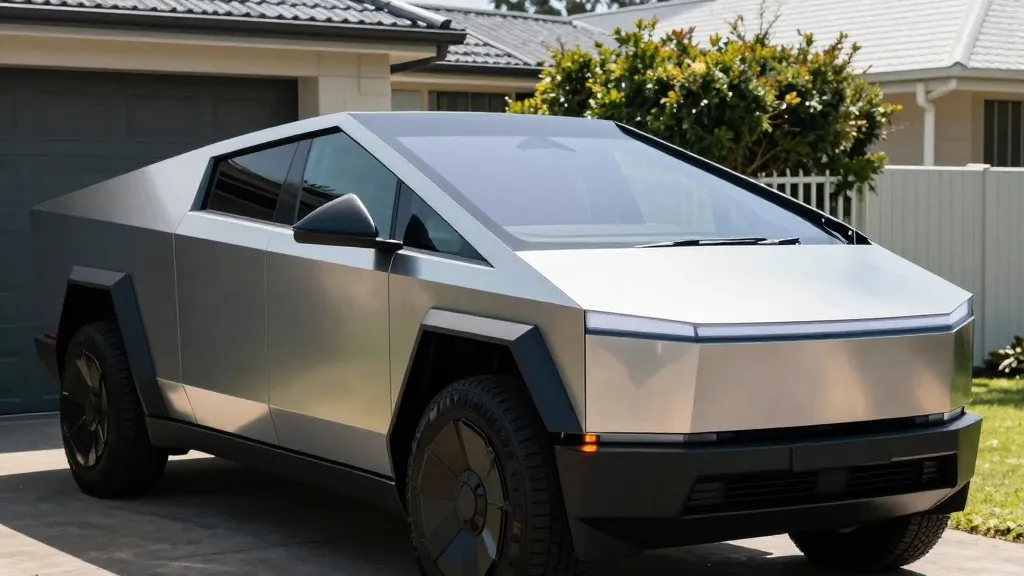
Thousands of electric vehicle enthusiasts in Australia and New Zealand have faced a stark reality this week: the vehicle they have been waiting to buy for nearly seven years will not arrive. Tesla has officially discontinued its plans to produce the Cybertruck for these two markets. In a direct email to reservation holders sent on October 23, 2026, the automaker confirmed that all existing orders are now void. This decision resolves a long-standing tension for customers who have kept A$150 deposits on hold since November 2019, only to be told that the company will not build a version of the truck specifically for them.
The core issue driving this cancellation is the engineering mismatch between the vehicle and the region. The Cybertruck is manufactured exclusively in a left-hand-drive configuration. Australia and New Zealand require right-hand-drive vehicles, a standard also used in the UK and Japan. Adapting the truck for these markets would have required a significant investment in re-engineering and certification. For a product that is currently facing soft demand in North America, Tesla determined that the cost of retooling the production line was no longer financially justifiable for a combined market of approximately 33 million people.
Tesla is now attempting to convert these dead reservations into sales of vehicles it already produces for the region. The company is offering a free one-year subscription to its Full Self-Driving software for customers who choose to order a new Model 3 or Model Y instead. Full refunds for all payments made will be processed within 30 days. This strategy marks a clear shift in focus, prioritizing the established Model lineup over the niche pickup truck for international expansion.
Contextualizing the timeline reveals a pattern of delayed expectations. Tesla quietly closed the Australian reservation page in May 2022, replacing it with a simple updates button while holding onto customer deposits. In 2024, the company shipped a Cybertruck to the region for a display tour. During that period, CEO Elon Musk told shareholders that certification for other markets might happen the following year. That year passed without a right-hand-drive version ever appearing, leading to the final decision made just one day after the company reported its Q3 2026 earnings.
The underlying demand numbers further support Tesla's decision to halt the project. In the third quarter of 2026, the company delivered 8,295 units categorized as Other Models, a segment now dominated by the Cybertruck since the end of Model S and X production. This translates to an estimated annual sales pace of roughly 30,000 units, a figure far below the 250,000-unit annual capacity of the production line. With such a gap between capacity and demand, investing in a specialized right-hand-drive version was difficult to justify for any financial leadership.
Looking ahead, the Cybertruck appears to be cementing its status as a niche, primarily American product. International expansion efforts are now focused on left-hand-drive markets, including South Korea, the UAE, and parts of the Middle East. The truck remains blocked in the European Union due to pedestrian safety regulations. For Australia and New Zealand, the era of waiting for a local launch is over, replaced by the option to switch to a model that already fits their roads.
Source: Electrek · original report published