2027: The New Deadline for Tesla’s Unsupervised Driving
Tesla has set a new target for customer cars to drive themselves without a driver, but only within its existing robotaxi service areas.
By Rahul Sato ·
The wait for hands-free driving is moving to 2027.
Tesla updated its timeline for unsupervised Full Self-Driving in customer-owned vehicles during its third-quarter earnings call today. The company now points to the second quarter of next year as the launch window. This is the most recent date in a long series of promises made to buyers over the last decade. However, the definition of the product has shifted significantly from what early enthusiasts expected.
The announcement came in response to a direct question from shareholders. One of the top retail investor inquiries asked when unsupervised FSD would be available in personal cars. That question carried the weight of approximately 1.1 million shares. Tesla’s AI chief, Ashok Elluswamy, provided the answer. He clarified that the feature is not a simple software update that allows owners to sleep in the back seat of their Model Y while it drives them anywhere. Instead, it represents a different operational model.
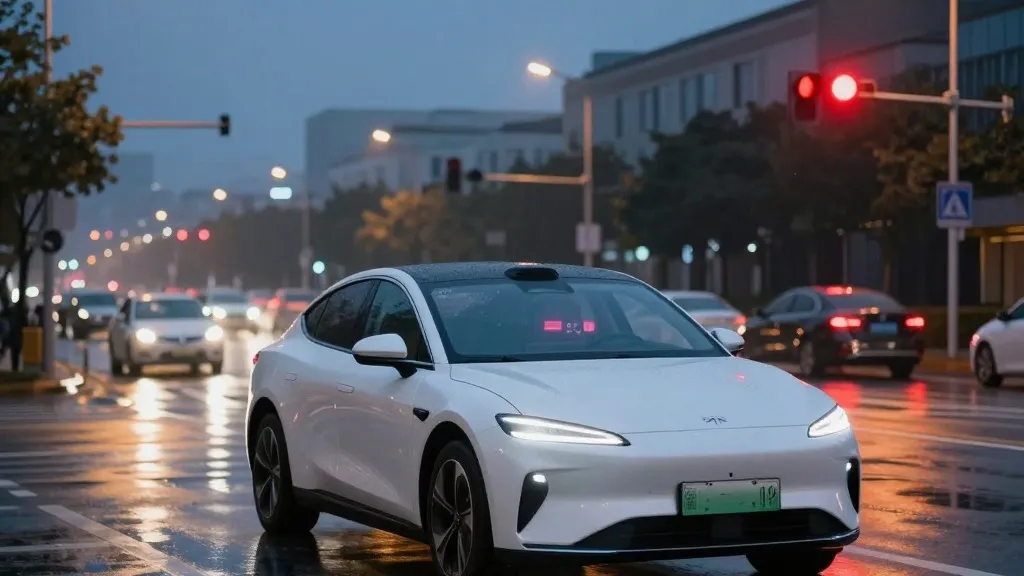
Under the new plan, owners will add their vehicles to Tesla’s managed robotaxi fleet. This means the car does not drive itself freely across the country. It drives itself only where Tesla’s robotaxi service already operates. The vehicle effectively becomes part of a networked fleet rather than an independent autonomous machine. This distinction changes the nature of the product for the average consumer.
The current scope of this network is limited. Tesla’s robotaxi service runs in six US metropolitan areas. In most of these cities, the service covers only small slices of the local geography. For example, the Miami zone includes mostly West Miami and a strip toward Doral and Sweetwater. Orlando and Tampa launched in July with similarly small geofenced areas. The service generally sticks to low-speed routes and avoids highways and more complex urban environments.
Even within these zones, the system is not fully unsupervised everywhere. In the Bay Area, for instance, the service still requires a safety driver in every car. This is due to California regulations that mandate a safety driver for level 2 autonomous systems unless specific data is released to the DMV. Tesla has chosen not to release that data yet. The fleet size remains modest as well. Tesla reported nearly 2 million cumulative unsupervised miles by the end of the third quarter. A Cybercab joined the Austin fleet a month prior. Third-party trackers estimate the number of fully driverless Teslas on the road is in the dozens, not the hundreds of thousands previously suggested.
This new approach differs from the original sales pitch. For years, Tesla marketed FSD as a future capability where a car would drive itself anywhere via a software update. In July 2025, Elon Musk told investors that unsupervised FSD would be available for personal use in certain geographies by the end of that year. A year before that, he expressed surprise if the technology was not ready the following year. Owners with hardware version 3 have also faced uncertainty, as their current computers cannot run unsupervised FSD, and no clear upgrade path has been provided.
The move to Q2 2027 narrows the product definition. Your car joins Tesla’s fleet, operates in Tesla’s zones, and follows Tesla’s terms. There are no highway road trips. There is no unsupervised commute unless you live and work within one of the specific service areas. Elluswamy reiterated that safety remains the primary bottleneck. He believes these safety issues will be resolved by next year, though he admitted the timeline is an estimate. The company is essentially guessing based on current progress.
What happens next depends on Tesla’s ability to expand these zones and fix safety hurdles. Shareholders will be watching closely to see if the Q2 2027 target holds. The shift from a universal driverless car to a geofenced fleet vehicle marks a significant change in how Tesla views the future of its customer base. The technology is advancing, but the scope of its availability remains tightly controlled.
For now, the promise is specific: unsupervised driving in customer cars will arrive in the second quarter of 2027. It will be limited to the areas where Tesla already runs its robotaxi service. This is a step forward, but it is a smaller step than many had hoped. The goalposts have moved, and the finish line is now defined by map lines rather than open roads.
Source: Electrek · original report published