Run Clubs: Gen Z swaps bar tabs for 5K entry fees and post-race festivals
Organized races and recreational leagues are drawing record numbers of young adults who cite community and self-improvement as primary motivators.
By Adam Lin ·
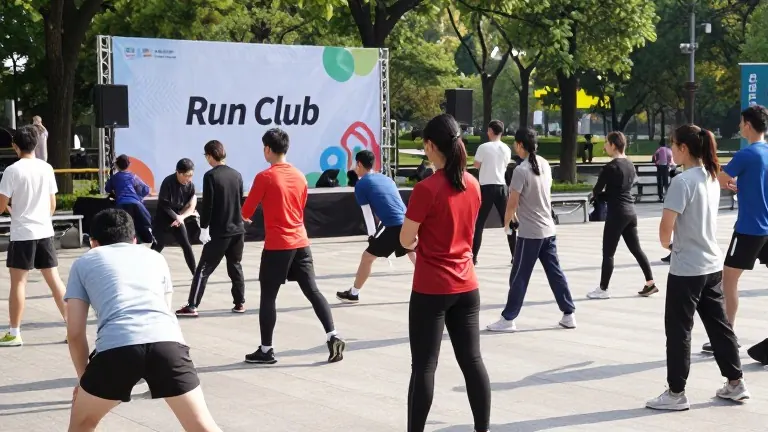
Diplo’s team hosted a five-kilometer race in Queens, New York, last week that drew approximately 12,000 participants.
Entry fees for the event ranged from roughly $70 to $250 for a VIP package that included cold plunges, peptide product samples, and a dance party led by the Grammy-winning DJ.
The format replaces traditional nightclub elements with electrolyte drinks, athleisure wear, and daytime settings in public parks.
Demographic data indicates a shift in how younger Americans spend their leisure time and money. A Bank of America report released earlier this year found that fitness-related spending by Gen Z and millennials rose at a faster rate year over year in early 2026 than spending on bars.
Joe Wadford, an economist at Bank of America, described the trend as a shift from barstools to barbells, noting that alcohol consumption rates have hit record lows among these cohorts.
CivicScience polling from earlier this year showed that seven out of ten adults under 30 plan to join a recreational sports league within six months.
That figure exceeds the 37% participation rate across all age groups, which itself represents a five-point increase from 2025.
Volo Sports, which operates leagues for volleyball, kickball, and soccer, expects 950,000 total player registrations this year.
This projection marks a 34% increase from the 710,000 registrations recorded last year and a nearly 500% rise from 2019 levels.
Giovanni Marcantoni, Volo’s founder and CEO, stated that about three-fourths of the company’s growth stems from organic expansion rather than acquisitions.
"I think 'Volo,' I think 'friends'," Marcantoni said. "Both those things put a smile on your face, and that's what our goal is as a brand."
Marathon participation among younger adults has also climbed. The share of New York City Marathon finishers in their 20s reached nearly 24% in 2025, up from about 15% in 2019. New York Road Runners reported that 27% of registered runners for the 2026 race are in their 20s. Similar upward trends appear in Chicago and Boston marathon data. Ironman said participants under 30 now make up a quarter of its triathlon entrants, up from 13% a decade ago. This age group represents the company's fastest-growing market in North America. A 2025 Strava survey found that Gen Z individuals were 39% more likely than Gen X to use fitness to meet people with shared interests. Hyrox, which mixes running with strength training, has partnered with dating app Surf to facilitate blind dates during its doubles competitions. Participants meet for the first time just before beginning one-kilometer runs interspersed with workout stations. Surf distributes wristbands to singles at events to indicate relationship status and hosts post-race social gatherings. "Matching with someone based off a shared interest or passion is a better way to meet your person than hot-or-not swiping," said Rob Long, Surf’s co-founder and CEO. Brody Short, a 26-year-old from Liberty Lake, Washington, founded the run club Energy after finding it difficult to convince friends to trade late-night bar visits for early morning runs and yoga sessions. Her club organizes weekly runs, local nonprofit fundraisers, and cheering squads for members entering organized races. Short, who will serve as a bridesmaid and maid of honor in upcoming weddings for friends met through the club, said the initiative is about building lasting relationships. "It's deeper than the running," Short said. "I didn't start it just so every Tuesday I could run three miles with somebody I didn't know. I did it because I wanted to meet friends. I wanted to find real people that I could integrate into my life." Autumn Rossi, a 30-year-old sales analyst from New Jersey who attended Diplo’s race, noted that the shift does not eliminate alcohol consumption but changes the context. "I definitely don't think there's a death to drinking," Rossi said. "I think people are just doing it in a different way, which is important." Diplo’s run clubs will continue to host post-race festivals with bars selling cocktails and beer. The DJ, born Wes Pentz, said the daytime format allows him to work fewer late nights as he ages. "I don't want to spend the rest of my career playing into the night until 4 in the morning," Diplo said. "I want to build this brand where I can have these parties in the daytime."
Source: CNBC