Start Here to Tame Paper Clutter
A professional organizer outlines a low-pressure method for sorting documents, prioritizing immediate tasks, and simplifying long-term storage.
By Adam Lin ·
Professional organizer Kacy Paide advises homeowners to stop fearing their paper piles and start sorting the stacks nearest to them.
Paide has worked as a professional organizer for more than twenty years. She specializes in helping clients manage paper clutter without feeling rushed.
"You're in control of your paper, and it's up to you how fast you want to get through it," she says.
The process begins by focusing on documents on desks or dining tables rather than items stored in garages or office closets. Paide notes that the documents requiring immediate action are usually the ones closest to hand.
Sort these nearby papers into two distinct piles: active and inactive. Active documents require follow-up, such as making a phone call or paying a bill. Inactive documents include receipts, birth certificates, and sentimental items like old love letters. Set inactive items aside for later review.
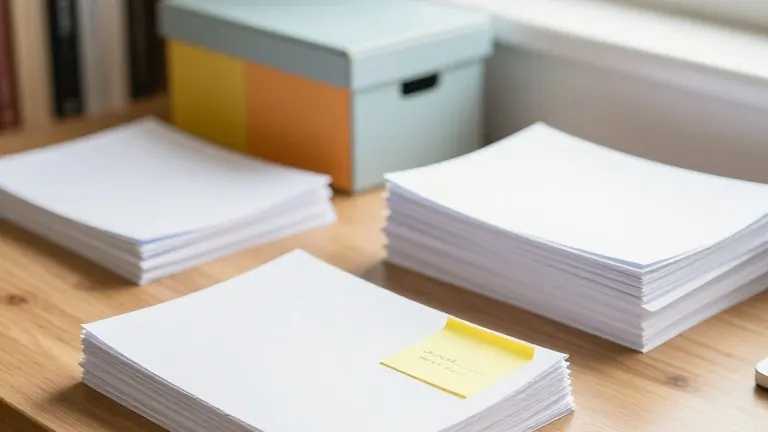
For active paperwork, write the specific due date boldly on a sticky note with a permanent marker and attach it to the document. Paide recommends using precise deadlines, such as "due by Nov. 15" or "start no later than 12/1." Vague labels like "urgent" or "due now" lose their meaning over time.
Once sorted, create a filing system that fits your habits. You can alphabetize, color-code, or label folders, but the best system is one you will actually use. Store critical items like passports and marriage certificates in a brightly colored folder placed at the front or back of a file box. This placement makes them easy to spot without rifling through other papers.
Use simple file folders labeled with sticky notes. This allows you to reuse the folders if you change your sorting method later. Storing labeled file boxes on bookshelves creates a visual system that is both functional and approachable.
Decide what to discard by asking yourself under what circumstances you would need to produce a specific document. The Federal Trade Commission advises destroying items containing sensitive information to protect against identity theft. This includes account numbers, birth dates, passwords, PINs, signatures, and Social Security numbers. Shred documents only if it makes you comfortable.
Bring a family member or friend in to help sort sentimental papers like old letters or divorce documents. Paide suggests voicing your thoughts about these items as you go through them. In her experience, people reach a decision about keeping or tossing such papers quickly.
Organizing is an ongoing process that requires maintenance. You do not have to finish everything at once. Dedicate 25 minutes at a time to keep the task manageable.
Source: KNKX Public Radio