
Ontario Experts Urge Homeowners to Skip Raking Leaves
Arborists and environmental groups explain how leaving leaf litter supports pollinators and improves soil health, with specific exceptions for diseased trees.
By Adam Lin ·
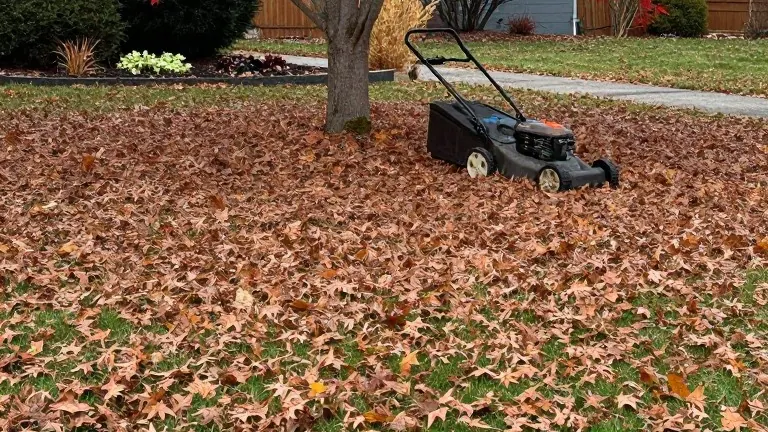
Ontario homeowners face a choice this fall that extends beyond aesthetic preference. Environmental experts and arborists advise against raking leaves, arguing that the practice disrupts a natural cycle essential for local wildlife and soil vitality. As daylight hours shrink following the clock change on November 1, these professionals recommend a different approach to yard maintenance.
The David Suzuki Foundation identifies photosynthesis as the driver behind seasonal leaf loss. During spring and summer, chlorophyll absorbs sunlight, converting carbon dioxide and water into glucose. As autumn arrives, deciduous trees undergo abscission, a process that cuts the leaf from the stem. Chlorophyll breaks down, revealing carotenoids and anthocyanins. These pigments produce the yellow, orange, and red hues visible in foliage. Weather conditions influence the duration of color; warm, dry days prolong vibrancy, while cold, wet weather accelerates decomposition into brown tannins.
Leaving leaves on the ground serves a biological function for trees. The leaf litter decomposes into the soil at the tree base, returning nutrients to the root system. This cycle supports bud and leaf production in the following spring. The foundation describes this as a repeatable process of drop, decompose, and absorb. The leaf layer also acts as insulation, shielding roots from winter cold.
Pollinators rely on this ground cover for winter survival. Butterflies and moths overwinter as eggs, caterpillars, chrysalises, or adults near their birthplaces. A layer of fallen leaves provides camouflage for swallowtail butterfly chrysalises. Woolly bear caterpillars tuck into the leaf layers to protect themselves. Bumblebee queens that burrow into the ground benefit from the thermal insulation provided by the leaves. Insects trapped in the leaf layer also serve as a food source for birds, chipmunks, and squirrels. Thrashers, for example, actively disturb the leaves to locate these insects.
Dan Sharp, an Ontario-based master arborist with the Davey Tree Expert Company, supports the practice of leaving leaves. He notes that trees in forested areas naturally grow on decomposing organic matter. While whole leaves can appear unsightly or blow around, Sharp suggests mulching them with a lawn mower. This process breaks the leaves into smaller particles, speeding up decomposition and allowing nutrients to reach the soil beneath the grass blades. Homeowners can also rake leaf particles onto garden beds for additional winter protection.
Exceptions exist for trees showing signs of foliar disease. Sharp advises bagging and disposing of leaves from affected trees to prevent pathogen spread. Earlier this year, arborists reported a rise in tar-spot disease on Norway maples, a non-native species commonly used for urban shade. This fungal disease causes early leaf loss, sometimes as early as July or August. Powdery mildew, which appears as white, dusty spots, presents a similar risk.
When diseased leaves fall to the ground, the pathogen remains in the soil. In spring, new leaves can become reinfected by the pathogens present at ground level. Sharp explains that raking and bagging these specific leaves limits the spread. Trees become more susceptible to such diseases during dry summers if they are not adequately watered. Poor soil quality also increases the risk of foliar infections.
Sharp provides guidance on planting to complement the leaf strategy. He recommends sweetgum trees for their red, yellow, and orange fall colors. He advises against planting boxwood shrubs due to invasive pests like the box tree moth. This insect defoliates leaves in its caterpillar form and can kill untreated shrubs in days. Multiple generations hatch each year, complicating control efforts. Boxwood leafminer and boxwood psyllid also cause stunted growth and dieback.
Alternatives to boxwood include yew, a compact coniferous shrub with red berries that are poisonous to children. Euonymus, dogwood, or viburnum serve as suitable options for garden edging. To protect daffodil and tulip bulbs from squirrels, Sharp recommends applying six to eight inches of mulch to gardens during the fall.
Source: Burlington Post