Colleges Turn To Peers For Conversations
Universities are hiring students to run social-skills training after incoming classes arrived with fewer informal connections.
By Adam Lin ·
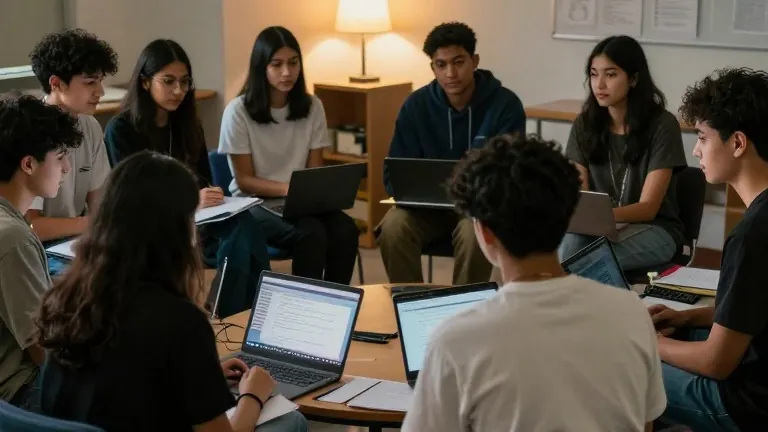
Universities are asking students to teach other students how to hold a conversation, a shift in campus spending driven by incoming classes arriving with fewer friendships formed outside structured settings. Programs at schools including the University of Michigan and Stanford University place trained undergraduates in dormitories and first-year seminars to run small-group discussions.
The push responds to what administrators describe as a decline in students' ability to sustain face-to-face discussion. Michigan's program places peer facilitators in residence halls, where they lead weekly sessions on starting conversations, listening and resolving disagreements. Stanford runs a similar effort through its resident assistants, who receive several hours of training before leading dorm floor meetings.
The approach draws on a long history of student-led orientation programs. What has changed is the scale. Michigan enrolled about 1,200 first-year students in its peer sessions this fall, up from 400 three years ago, according to program figures released by the university. Stanford reported 300 trained facilitators across its undergraduate dormitories.
Administrators point to a shift in how students spend their first weeks. At Michigan, 62 percent of first-year students arriving in 2025 said they knew fewer than five people on campus, compared with 38 percent in 2018, according to a university survey. At Stanford, 71 percent of incoming students in 2025 reported spending more than 10 hours a week on their phones during the prior summer.
Some faculty have questioned whether peer training can substitute for institutional support. At Michigan, the peer program operates on a $1.1 million annual budget drawn from student services fees, money that could otherwise fund counseling positions. Counseling center staffing at Michigan has stayed flat at 22 counselors since 2020, while the undergraduate population grew by 1,400.
Students who take facilitator roles say the work requires practice. At Stanford, facilitators complete six hours of training before leading sessions, covering topics such as interrupting gracefully and disagreeing without ending a conversation. Michigan's facilitators attend eight hours of workshops over the summer and receive a $600 stipend for the academic year.
Peer programs at both schools report attendance figures. Michigan logged 89 percent attendance at weekly sessions during the fall 2025 term. Stanford reported 76 percent attendance across its dorm-based meetings in the same period.
Both universities have scheduled reviews of their programs for early 2027, when administrators will decide whether to expand facilitator numbers or redirect funds to counseling services. Michigan's review is set for January; Stanford's follows in February.
Source: Cascade PBS