Empty Smokehouses in Western Alaska Define Tight Senate Race
Salmon shortages in the Kuskokwim River have turned a local subsistence crisis into a central battleground for incumbent Dan Sullivan and challenger Mary Peltola.
By Adam Lin ·
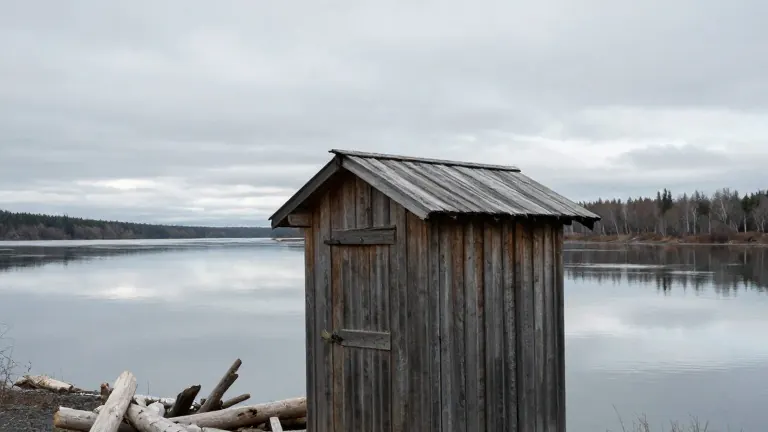
The drying racks at Evon Waska's home stand empty this fall.
Waska lives on the edge of the Kuskokwim River, a place his parents chose when they ended their nomadic life. He points to his smokehouse and notes that it is where they usually make smoke. Most years, the racks hold salmon. In recent seasons, too few fish have returned from the Bering Sea. Government agencies often close the river to conservation efforts, even stopping Waska from fishing for his family's food. He blames industrial trawlers operating miles offshore for the decline.
"They don't close the trawlers. They close me and my people first," Waska said.
The conflict pits remote Indigenous communities against a $1 billion pollock industry largely based in Seattle. Trawlers tow nets a quarter mile long with openings as wide as a football field to catch pollock, the white fish used in imitation crab for McDonald's Filet-O-Fish. These nets also scoop up prized king salmon and other fish, a practice known as bycatch. In a year where Alaska could decide the U.S. Senate's balance of power, political ads have filled the airwaves with arguments about the fish.
Republican incumbent Dan Sullivan has historically supported the pollock industry. He now touts a new bill designed to reduce bycatch and protect seafloor habitat. Sullivan called it the most comprehensive bycatch legislation ever introduced. Democratic challenger Mary Peltola, who is Indigenous and from the Kuskokwim, says she would ban factory trawlers, the largest vessels in the fleet. She criticized Sullivan for waiting until the final moments of the session to propose a half-baked solution.
"Dan Sullivan reeled in over $300,000 from trawlers and waited until the 11th hour for a half-hearted and half-baked solution," Peltola said.
Heather Mann, who leads a trawlers association, argues that blaming the pollock fishery will not help western Alaska. She stated that eliminating pollock would have a minimal impact on restoring salmon runs according to current science. Pollock trawlers reported catching 40,000 Alaska salmon this year, a small fraction of their total harvest. In Kwethluk, a village on the Kuskokwim, the waste still feels like a direct loss. Subsistence fishing remains the main occupation and the backbone of local culture. Tribal president Mary Nikolai visited a neighbor's cold smokehouse that had sat unused all summer.
"Most of the smokehouses are like this. And it's like a slow trend of closing our workforce out," Nikolai said.
Source: KNKX Public Radio