Agroforestry Northwest Secures $500,000 Federal Grant
The nonprofit plans to use the funding to expand tree-planting projects across Western Washington after a year of budget cuts and staff adjustments.
By Idris Robinson ·
Nearly $500,000 in federal grants has landed in the hands of Agroforestry Northwest, a nonprofit organization based in Western Washington. The funding, secured in 2026, is expected to finance the construction of local agroforestry projects across the region.
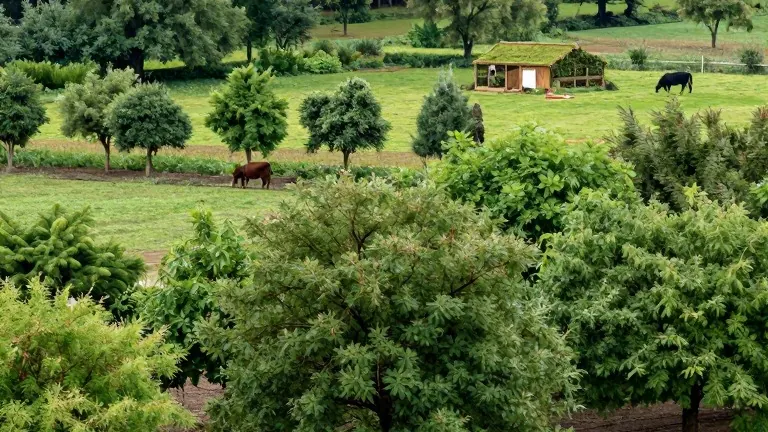
Agroforestry Northwest was formed in 2022 and operates as the only agroforestry-dedicated nonprofit in the Pacific Northwest. The group uses Raising Cane Ranch in Snohomish as its northern headquarters. The 38-acre property was formerly a hay and cattle operation but has been converted into a site for growing multiple crops and animals together.
Executive Director Carrie Brausieck stated that the organization’s primary goal is to introduce agroforestry methods to the northwest part of the state. She noted that this area has adopted agricultural techniques more slowly than Eastern Washington. The practice involves combining plants and animals to increase yields and improve ecological conditions.
The nonprofit faces financial constraints typical of the sector. Brausieck explained that the work is expensive and that not every landowner can afford to purchase trees independently. Increased fuel prices in recent months have added to these costs. A proposed decrease of nearly $5 billion to the USDA 2027 budget has also created uncertainty for the organization’s future operations.
Similar budget cuts significantly impacted the nonprofit in 2025. Brausieck said the group had to adjust its staff levels and move certain positions to part-time status. Much of 2025 was spent rewriting grant applications to align with the new administration’s guidelines in order to recover funding.
The organization partners with local conservation districts to expand its reach. In Skagit County, they collaborated with conservation districts to research agroforestry benefits in wetlands and released the Wet Feet Farming guidebook in 2024. In San Juan County, the group worked with the county conservation district to gauge public interest and hold educational events.
Federal subsidy programs play a major role in these efforts. The Skagit County Conservation District offers landowners up to $100,000 per year to install riparian buffers. In Whatcom County, the Conservation Reserve Enhancement Program has funded the construction of more than 132 miles of riparian buffer and planted over 1 million trees since 1999. Brausieck described these programs as essential because they cover costs that local farming operations often cannot afford alone.
The nonprofit also promotes creative ecology, a philosophy that integrates art with natural resources. At Raising Cane Ranch, this approach resulted in the construction of a garden and cathedral made of plants. Brausieck said this method helps communicate the value of nature to people who are not primarily interested in farming or forestry.
Source: Salish Current
More Business · Customer Complaints · Report a business · Got a Story?