3 Classic Films Prove Why Hollywood Favors Catholic Horror
New book argues specific theological concepts make the faith a natural fit for the genre, from exorcisms to body horror.
By Rahul Sato ·
The Exorcist, The Omen, and Rosemary's Baby establish a clear pattern in American cinema: when a movie needs a religious villain or a specific type of spiritual authority, it almost always chooses Catholicism. Matthew Cressler, co-author of the new book Body And Blood, argues that this is not a random preference. He contends that Catholic theology provides specific narrative tools that other faiths do not offer for the horror genre. The book analyzes how these elements function in film storytelling.
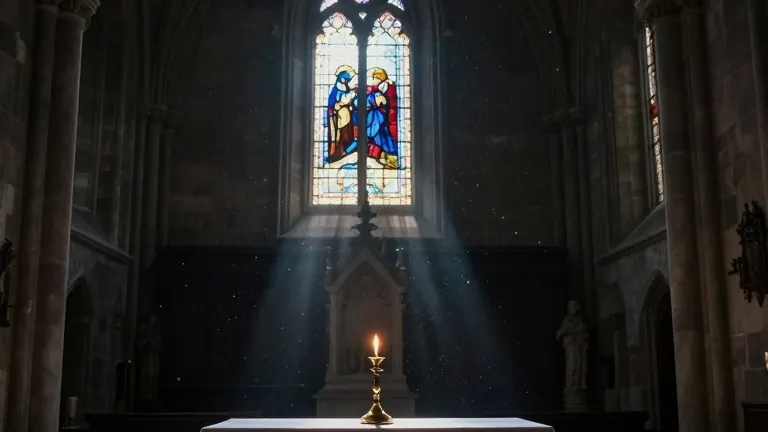
Cressler notes that the visual contrast between a white clerical collar and a demonic figure creates an immediate tension. He uses the example of a vampire appearing at a door or a child becoming possessed. In those scenarios, viewers do not imagine a Methodist minister arriving to help. The specific rituals and imagery of the Catholic Church, such as Gothic churches and mysterious conclaves, serve as a ready-made backdrop for fear and mystery.
The theological concept of suffering also plays a central role. Cressler explains that Catholics have long viewed suffering as a way to bear the cross of Christ and draw closer to him. This idea allows filmmakers to depict extreme physical pain as a form of spiritual connection. Aislinn Clarke, a horror film director who grew up Catholic, recalls her childhood reaction to the Eucharist. She remembered thinking that the priest holding up a cup and declaring it the blood and body of Christ seemed similar to cannibalism.
Indie films have taken these concepts to extreme lengths. In the 2019 film Saint Maud, a devout nurse recreates the suffering of Christ by lining the soles of her shoes with metal spikes. Clarke directed the 2018 film The Devil's Doorway, which features bleeding statues and demonic possession. She identifies the most horrifying scene not as the physical violence, but as a moment where nuns sing hymns to Christ while ignoring a young woman in labor in front of them.
The influence extends beyond explicitly Catholic stories. Cressler points to the 1960 film Psycho, where a motel owner keeps the mummified corpse of his mother in the basement. He argues that the theme of venerating the remains of the dead, a concept present in Catholic practice, appears in films that are not overtly religious. Reverend Aaron Williams, a pastor at St. Mary's Basilica in Mississippi, consulted on the 2025 horror film The Ritual. He explained that a priest receives sacramental authority through ordination, allowing him to act with the authority of Christ.
Williams noted that while the average Catholic may not encounter the occult regularly, the church maintains an actual rite of exorcism. This institutional structure gives horror writers a plausible framework for exorcism scenes. Cressler suggests that these frequent depictions influence how audiences perceive the church. He stated that if a room contains too many candles, crosses, and statues, the viewer knows something wicked is approaching. This association links the visual symbols of the faith directly to the presence of danger.
Source: KNKX Public Radio